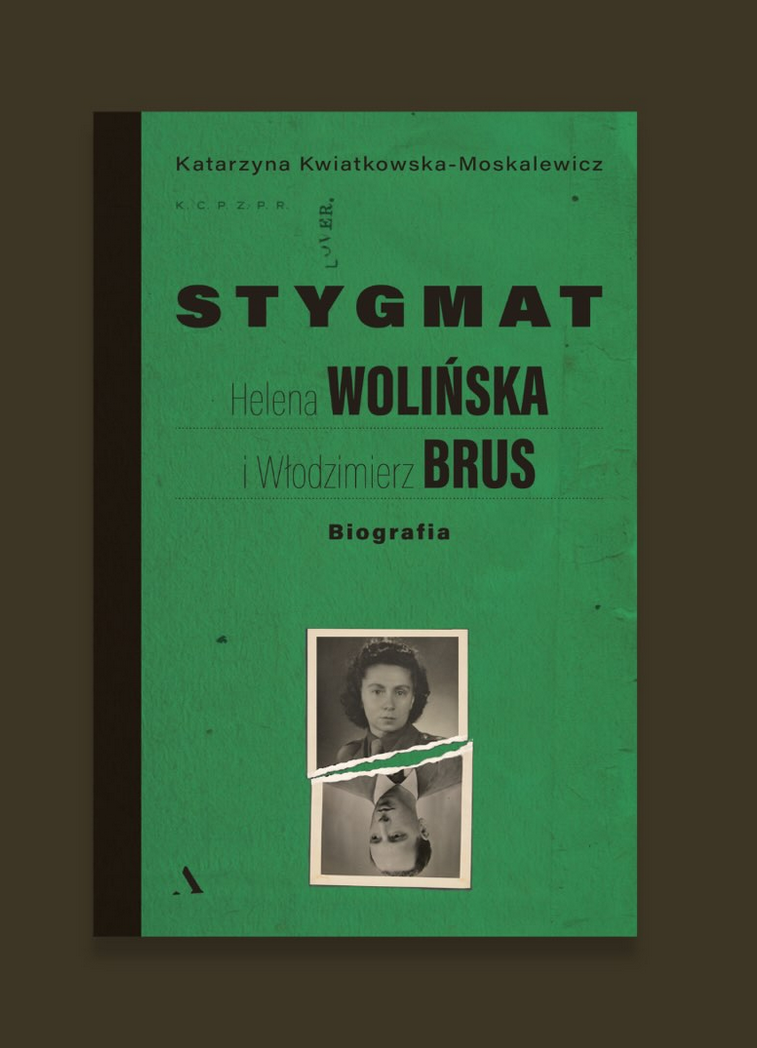
A prosecutor who became a symbol of Stalinist crimes and the inspiration for one of the Oscar-winning heroines of Ida, and a brilliant economist cursed by Gomułka in March 1968, along with Kołakowski and Bauman. And between them, a great love, drama, and a history that has often separated and united them.

Agora Publishing House and Bunkier Sztuki Gallery invite you to the Krakow premiere of the book "Stygma. Helena Wolińska and Włodzimierz Brus. Biography." A conversation with Katarzyna Kwiatkowska-Moskalewicz will be moderated by Paulina Małochleb.

"Stygmat" tells, dispels, and exposes. It tells the heartbreaking story of two people who lost everyone and everything in the Holocaust. They escaped with their lives, and then, amid the ruins of the old world, sought hope for a just order under communism and the People's Republic of Poland. (This hope, too, was ultimately taken from them.)

Katarzyna Kwiatkowska-Moskalewicz brilliantly fulfills her mission as a biographer. While maintaining empathy, she also confronts dark episodes, particularly those from Wolińska's life. She honestly presents the circumstances that shaped the characters' choices and personalities. Above all, she restores a just perspective on their decisions, entanglements, and times.

Admission free, no prior registration required.

*Only for adults.
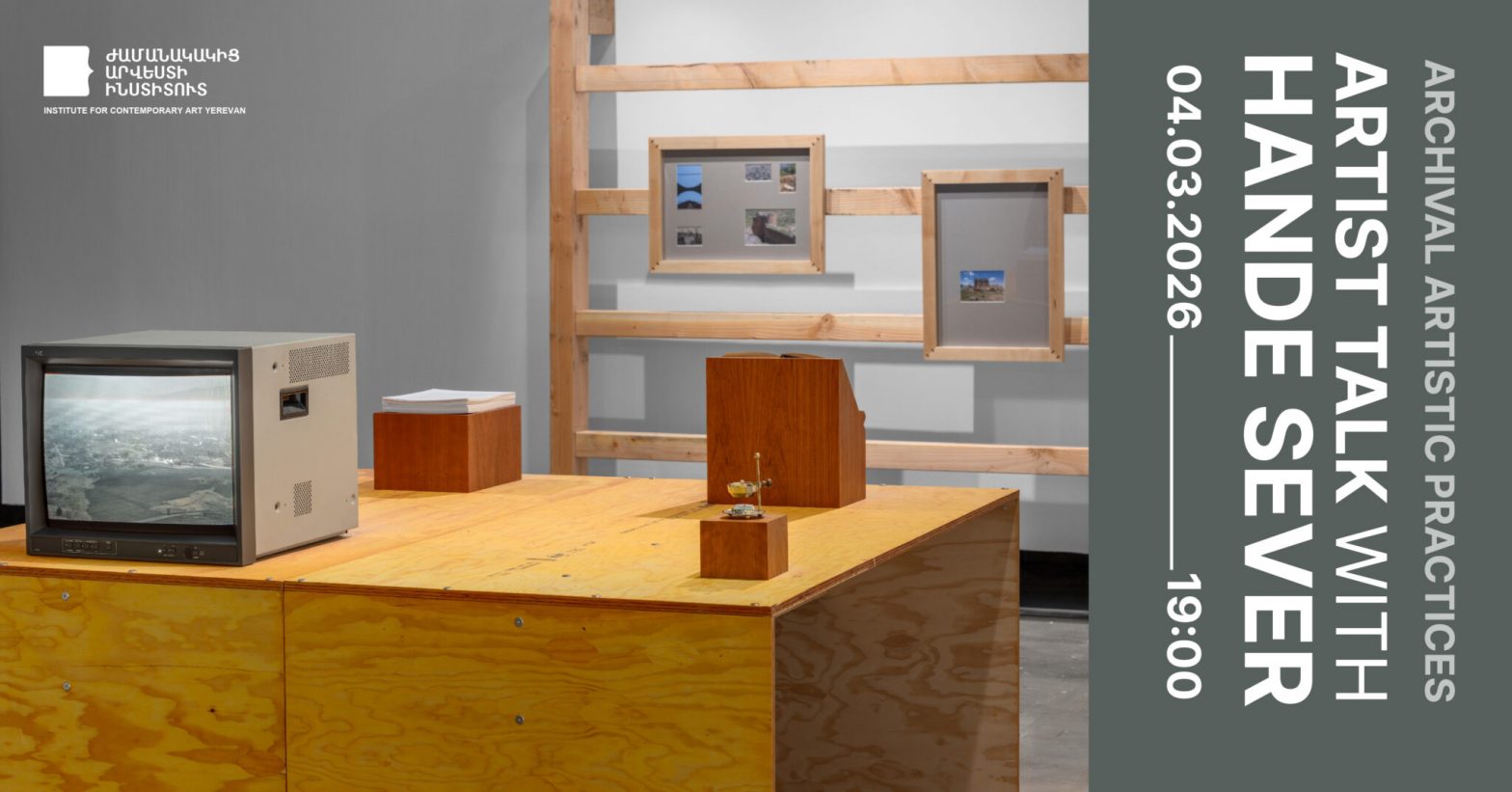
ICA Yerevan is pleased to invite you to an artist talk with Hande Sever, a Los Angeles-based artist and writer whose works explore the excavation of lost texts and distant images, examining how their omission and dissemination inform historical revisionism and shape archival practices.
As part of her talk, Hande will present her recent body of work examining German imperialism in West Asia before and during World War I. Drawing on the Anatolian and Baghdad Railway archives at Deutsche Bank’s Historical Institute, as well as a vernacular photo album titled ‘My Beloved Pauline in Memory of Turkey–Asia Minor 1917/18’, compiled by a German military officer during his deployment in the former Ottoman Empire, Sever traces the entanglements of infrastructure, war finance, and visual culture. The talk will feature her recent photo series In Search of “My Beloved Pauline” (2025), which centers on the album, alongside her ongoing project Under Clouds Smaller than a Man’s Hand (2027) focused on the railway archives which she will continue developing during her residency.
***
Grounded in theories of sovereignty and necropolitics, Hande Sever’s lens-based practice interrogates the ways in which historical narratives are shaped and manipulated, particularly in the context of state violence, surveillance, and censorship. Often drawing from her family’s history of persecution, her lens-based practice explores the intersection of personal and collective memory, uncovering how visual culture is used to both erase and construct historical narratives. She is a recipient of the 2021 Individual Artist Fellowship from the California Arts Council and the 2024 Arts Writers Grant from The Andy Warhol Foundation for the Visual Arts.
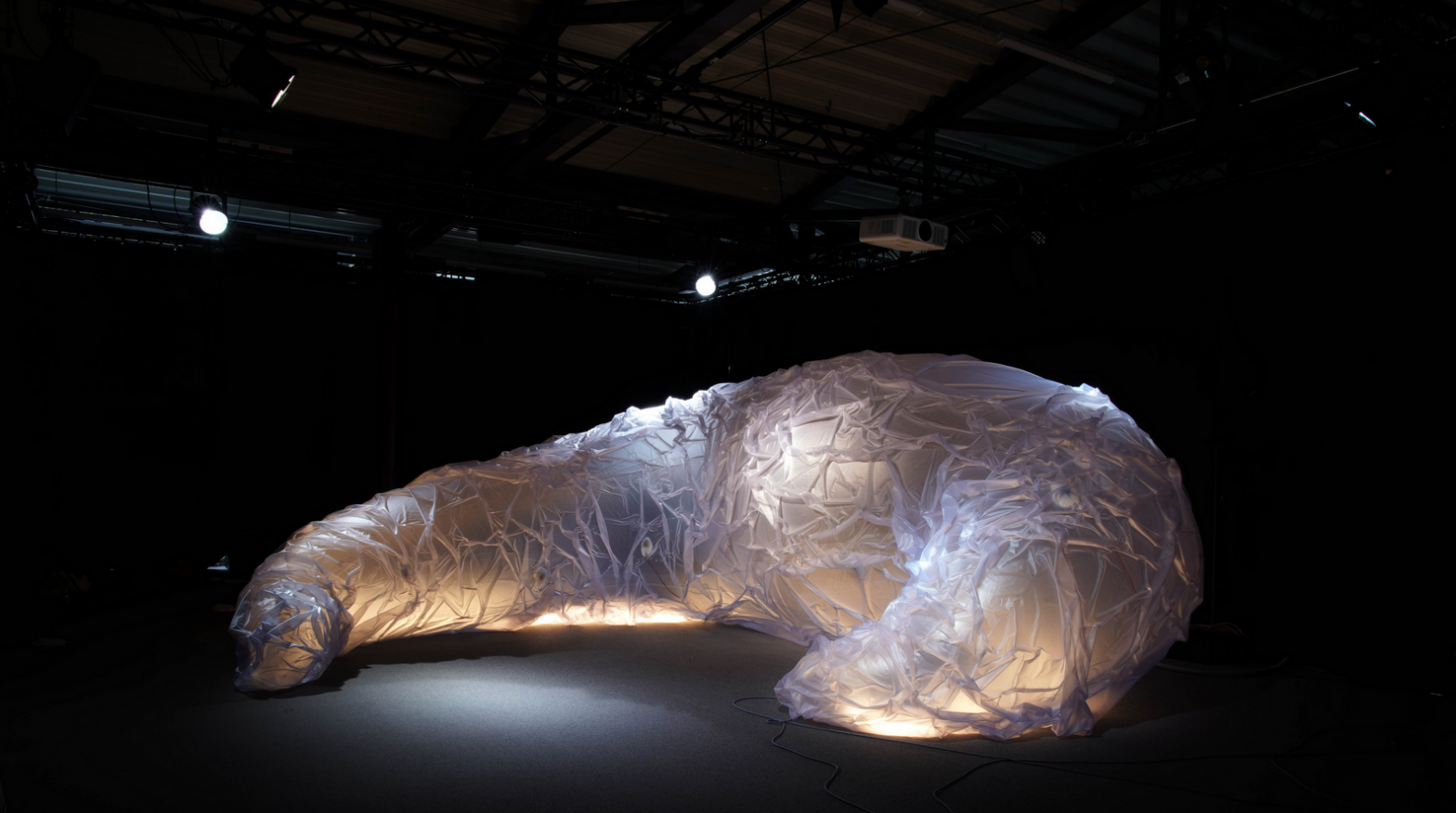
Orsolya Jancsovics‘ installation entitled Imitation deals with the issues of “imitation” and “identification,” further developing her earlier series of works entitled Disguise. The artist interprets disguise as a form of blending in: “dressing up as nature,” a gesture of returning to the beginning, to Mother Nature. The costumes here are not related to the world of consumption, but to the archaic knowledge of tribal communities, the experience of belonging and unity with nature. The individual who comes into contact with the “magical object” can immerse themselves in the flow experience, loose control over time, and reconnect with their own inner rhythm. The suspended work features contrasting pairs such as civilization–culture, urbanization–nature, contemporary–archaic, and male–female. The relationship between men and women appears not only in formal but also in technical terms: it merges into a kind of androgynous creation; the masculine framework often used in sculpture is combined with softer, feminine raffia weaving. The decomposing materials of the work themselves evoke the cycle of nature.
After her study tour in China, Orsolya Jancsovics made a definitive commitment to sculpture. The art and philosophy of Far Eastern culture have continued to influence her work ever since. She is interested in everything that is ancient and belongs to the past. However, this does not mean that she is simply nostalgic or traditionalist. For her, the transmission of values always goes hand in hand with constant change and dynamism: a synthesis of the past and the present, and perhaps even a sense of the future.
In her earlier works, she has already dealt with issues related to gravity and sculpture, such as balance and the risk of collapse. Her works are often characterized by performativity, while exploring borderline situations and the extent of the individual subject.
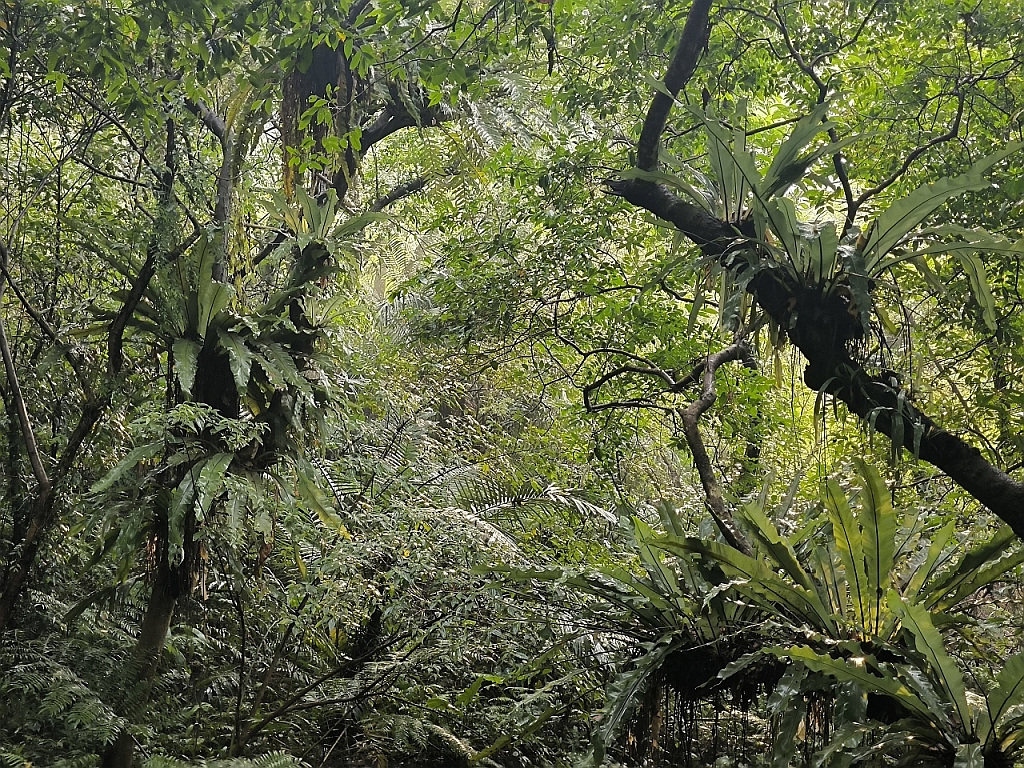
In the fall semester of the 2025/2026 academic year, as a student at Taipei National Taiwan University of Arts, she created her installation entitled Injured Island, which is the precedent of the work created in Puccs, composed of banyan roots brought from Taiwan, as well as wires, raffia, and yarn. Walking through the streets of the gigacity, the artist was fascinated by the banyan tree’s roots hanging down from above and intertwining everything, giving the impression that the tree had human hair. And next to it is a network of electrical wires running along the walls of buildings, which in Europe tend to be hidden away. These two types of “ropes” create a parallel between the natural and the artificial, as do some of the synthetic pieces used by the artist herself.
On view 0-24h PUCCS Contemporary Art, 1084 Budapest, Víg u. 22.
Deadline: 02/03/2026
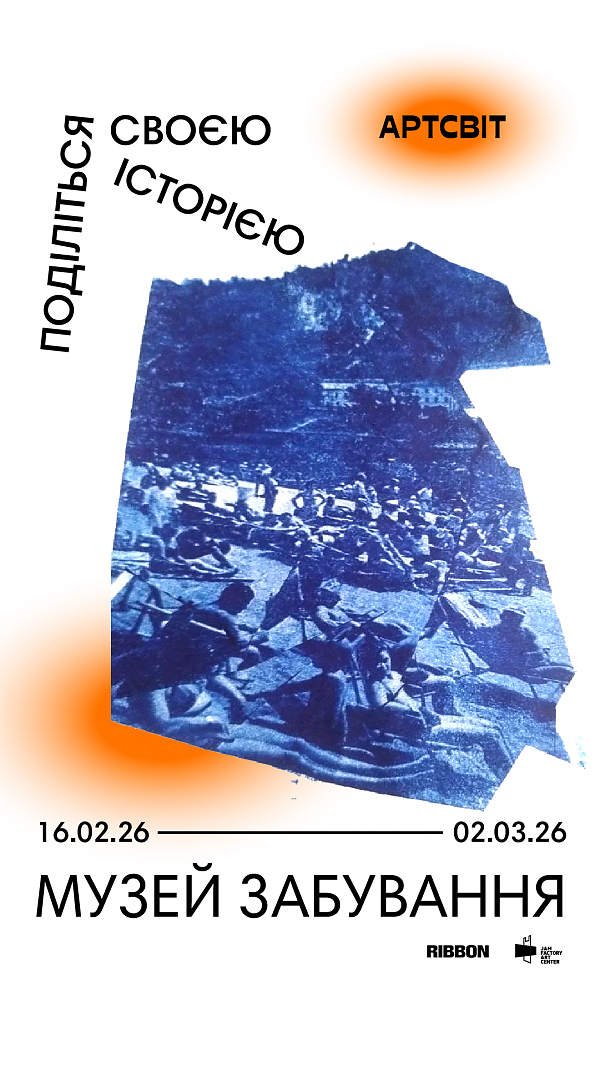
Artist Dasha Podoltseva and composer Olexiy Shmurak are working on the project “Museum of Oblivion: Dnipro” at the Artsvit Gallery (March 26 — early May 2026). This exhibition will be based on personal stories related to Dnipro. We are interested in two aspects: desirable and undesirable forgetting.
Undesirable forgetting: stories about things that are being destroyed and forgotten, but that we would like to preserve.
Desirable forgetting: things that are firmly lodged in our memory, but that are unpleasant and that we would like to get rid of.
If you have a story like this, please share it using this form.
We are collecting your stories until March 2, 23:59.
The project is part of RIBBON International’s KEY WORK: Art Grants program in partnership with Jam Factory Art Center.
Curator:Iva Polanecká
ALL THINGS DIGESTING by the artist duo sikau/pubalova approaches the exhibition as an interactive playground for the senses – sight, smell, hearing, and above all touch. The title of the exhibition refers to the process of digestion, and the installations develop this motif of absorption, interconnecting both the themes and the bacteria that we encounter in everyday life, from microbial pathways to changing ecosystems. All six works invite an open, playful reading; their boundaries are soft and porous. Porosity is a digestive principle – permeable membranes allow the exchange of substances, fluids, and signals, through which the foreign becomes a part of us. In the same way, the works’ porous boundaries let impressions and stories be absorbed and transformed, growing into shared experience. This approach can also act as a form of care – leading from sensation to soothing, from sharing to well-being (a sense of mental and physical ease and balance). It creates a time and space to absorb ideas, scents, and textures. The spatial, sonic, and haptic gestures of the individual installations comprise a whole that breathes at its own pace and creates a flowing rhythm wafting through the space. Sound recordings of metabolism and fermentation lend the exhibition its tempo. These small events (the bubbling of viscera, the fermenting of microbes) translate into rhythms that the body can feel, expanding what can be considered a voice – and how we might heal through it.
At the centre of ALL THINGS DIGESTING is the rotating installation Turning Green. Created in collaboration with Kunsthalle Praha through a public open call, its sonic layer consists of the voices of participants who shared their personal experiences of eco-grief and eco-anxiety. The recordings overlap and interweave, opening up a space for a collective experience that can feel surprisingly intimate. Eco-grief and eco-anxiety refer to the natural feeling of sadness at the loss of the landscape and the tension arising from an uncertain future – emotions brought about by climate change that affect our relationships to places, species, and people.
Together the artists create situations of care. Visitors pass through an experience of sensitisation and mutual harmonisation. Play and sensory perception become ways of caring for oneself, for others, and for the environment. It is attunement rather than explanation – subtle gestures with a striking effect, teaching us how to be together within an open flow of events.
During the exhibition, visitors will have access to a multilingual audioguide created in collaboration between Kunsthalle Praha and the Cabinet of Wonders platform.
Since 2020, the duo sikau/pubalova has been exploring the intersection of media art and experimental opera, with commissions from and exhibitions at, among other places, Science Gallery Bengaluru, Ars Electronica, the European Commission, LABoral, and transmediale Berlin.
Denisa Půbalová (she/her) is an audiovisual artist and a researcher in the fields of environmental philosophy, critical posthumanism, and technological infrastructures. She also works as a creative coder at Woven Studio (with clients such as UNESCO, LVMH, and the Montreux Jazz Festival) and as a visual artist for Metanoia Creatives.
Dr. Lea Luka Sikau (she/her) is a multisensory artist, sound scholar, and mezzo-soprano. She earned a PhD from the University of Cambridge and is a fellow of the Mellon School of Theater and Performance Research at Harvard University. She focuses on post-anthropocentric approaches in opera and media art, and since 2024 she has served as the Curator for Music and Sound Art at ZKM | Karlsruhe.
The exhibition brings together twenty young artists living in eleven countries of Eastern Europe – a region shaped not by a single shared memory, but by inherited discontinuities, delayed futures, and permanent transition. These artists do not approach history as a closed narrative, nor do they seek to resolve it. Instead, they inhabit a present shaped by instability.
Work updates, holiday selfies, breaking news, war reports, online shopping: spheres that were once separated – and often considered irreconcilable – now mingle seamlessly within everyday digital experience. Desire, dread, pleasure, empathy, and distraction coexist on the same screen, often within the same instant.
Generation Z is the first generation to have grown up entirely within this condition. Contradictions no longer require resolution. What once appeared incompatible – public and private, intimacy and exposure, play and anxiety, production and leisure – has become fluid, unstable, and permanently intertwined. The present moment functions as a dense field in which heterogeneous impulses, affects, and images collide, while also offering a shelter from an accelerated and uncertain future.
Navigating effortlessly between roles, profiles, and personas, at once singular and multiple, these artists keep oppositions in tension rather than dissolving them: digital and physical, material and immaterial, reason and emotion, vulnerability and control. Identity no longer operates as a stable core but as an ongoing process of self-production in interaction with others. The self emerges as collective and relational, deeply embedded in networks of attention and affect. Everything is all at once.
Artists:
Aaron Roth, Ant Łakomsk, Denisa Langrová, Dzelde Mierkalne, Dominika Kováčiková, Helena Parys, Katrīna Biksone, Madlen Hirtentreu, Mara Verhoogt, Matyáš Tserhack Maláč, Miķelis Mūrnieks, Morta Jonynaitė, Nikola Balberčáková, Olga Krykun, Paula Tončić, Emilija Povilanskaitė, Sarah Nõmm, Tornike Gognadze, Valentina Várhelyi, Weronika Wysocka.
Curator Michal Novotný
Co-curator Marius Armonas
Coordinator Dovilė Barcytė
Architect Gabrielė Černiavskaja
Graphic designer Ringailė Demšytė
Technician Dominykas Šavelis.
OPENING: 28/02.2026, 16.00 at Cafe Fatal
Curator: Vanda Skalova
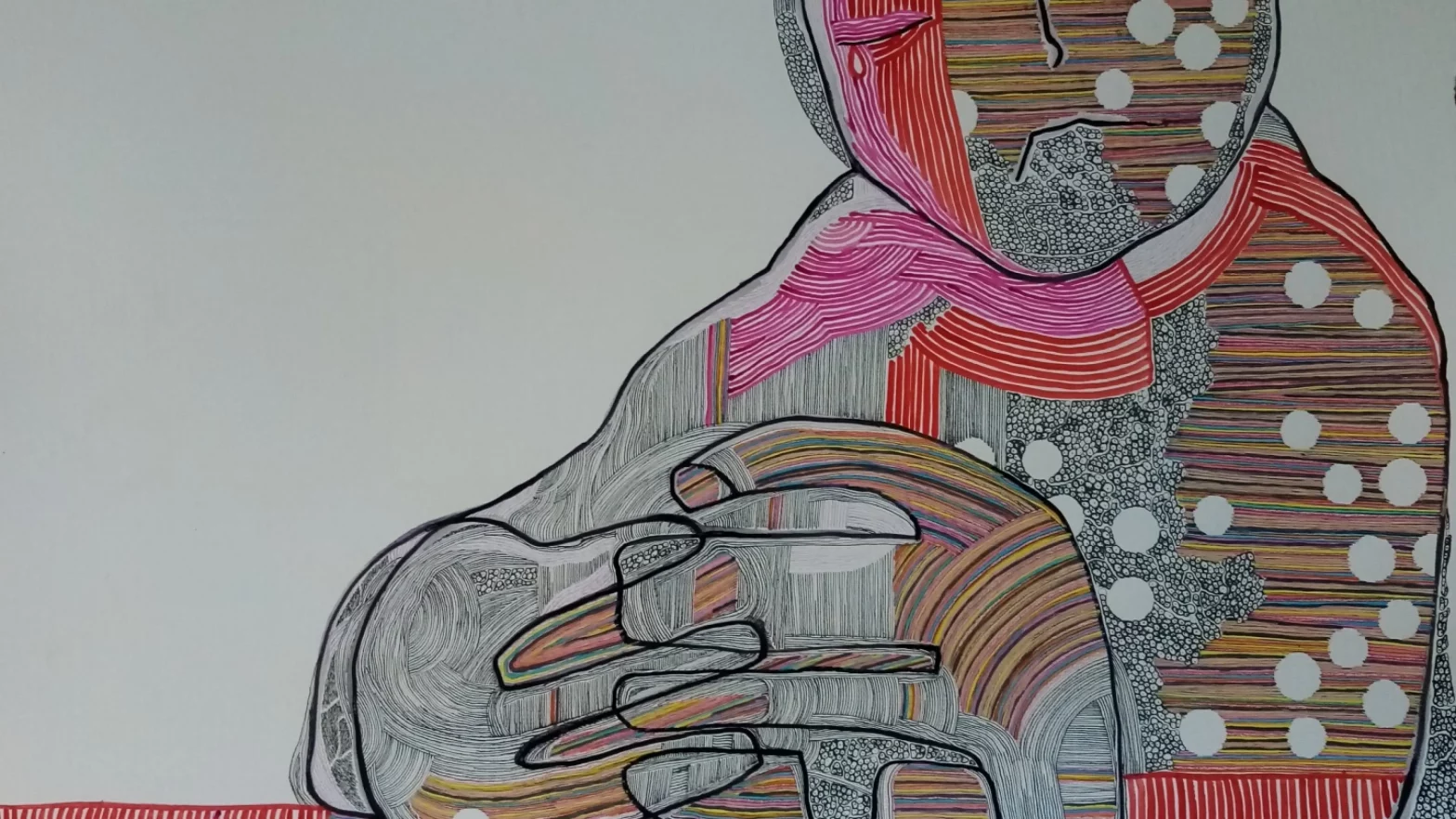
For Marcela Vichrová, a basic and dominant element in the painting is the line. More than merely delineating surfaces or defining contours, the line possesses power, tension and an almost haptic quality. In the alternation of bright colours, her curves repeat and return, one following another. The structures that emerge resemble embroidery, layers of quartz in agate, print matrices or maps. Every trace is its own, and even if it deviates slightly, it does not lose its fixed connection to the whole, which in the end tends to more closely resemble a unique variation on symbolic representation than an actual animal, human being or object.
In her paintings and drawings, the author comes from everyday situations, personal memory and a deep relationship to the landscape of Pracheň and Šumava Podlesie. Inspiration for her are both ordinary appearances and small messages, as well as the landscape and the world that directly surrounds her.
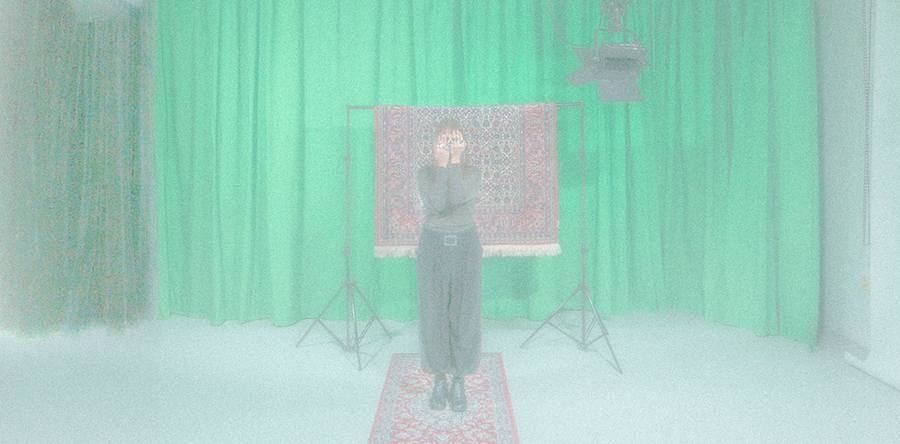
Thanks to my father who gave me this Gucci face is a series of five video essays on the topics of identity, origins and adolescence in which the artist draws upon her experiences of growing up in East Slovakia with deaf parents. She explores her personal associations of silence through a conceptual series of muted “music” videos in which a combination of sign language, dance and the spoken word probes the topics of social hierarchies, exclusion and the search for a sense of belonging. The “Gucci face” functions as slogan and metaphor, reflecting the relationships between visibility, identity and social status. It touches upon the idea of social value as a commodity which can be bought and paid for – a logic which is deeply embedded in the post-socialist environment in which consumer items such as luxury cars or clothing serve as a means of asserting social status and class.
The artist conveys a sense of intimacy through her images of the family home which her father had built with his own hands, but she adds an ironic distance by presenting her story within the context of a luxurious functionalist villa which symbolizes bourgeois identity and political power, thereby generating a tension between language, means of representation and social norms.
Viktória Citráková is active in both literature and visual art, and her work in both fields is focused on the idea of text as an artistic medium. She draws on intimate autobiographical detail: narratives about the body, failure, desire and shame which she embeds into a broader sociopolitical context. Seemingly marginal and insignificant experiences become the source for a personal mythology, and the artist uses these perceptions to reflect on the theme of fragility, both personal and collective. She studied under Julie Béna and Jakub Jansa at the Performance Studio at the Faculty of Fine Arts in Brno and also studied Theory of Interactive Media at Masaryk University. She has exhibited and curated several projects in cultural institutes in both Slovakia and the Czech Republic. Her literary work has been published in literary journals such as Vertigo, Host and Psí víno, and she has also featured on
the Sunday Moment of Poetry broadcast on Rádio FM and Rádio Devín. Her collection Synestetika (2024), published by FACE, was recently named Debut of the Year at the Ivan Krasko Award.
Since its opening, new media and technological art have been two of Kumu’s focal themes, which is why the opening exhibition of Kumu’s 20th anniversary year focuses on the current connections between art and artificial intelligence. The international group exhibition, referring to the myth of Pygmalion in its title, examines the changes and developments in human experience in culture and society in connection with the onslaught of new technologies.
AI on the exhibition
Prompt from the curator Anders Härm to AI: Dear AI, please write me a wall text for the exhibition Triumph of Galatea: Art in the Age of Artificial Intelligence taking place at the Kumu Art Museum. Participating artists are Andreas Albrectsen, Maria Arnal, Tilman Hornig, Olga Jürgenson, Marge Monko, Bernard Picart, Darja Popolitova, Jon Rafman, Sten Saarits, Jens Settergren, Jan Zuiderveld and Timo Toots.
AI’s response:
Triumph of Galatea: Art in the Age of Artificial Intelligence In classical myth, Galatea comes to life as the sculptor’s ideal made animate—a creation that exceeds its maker’s intentions and begins to act on its own. In the age of artificial intelligence, this figure acquires renewed relevance. Algorithms no longer function merely as tools but increasingly as agents that generate images, texts, and decisions, reshaping how creativity, authorship, and human agency are understood. Triumph of Galatea: Art in the Age of Artificial Intelligence explores this shifting relationship between human imagination and autonomous systems, asking what “triumph” might mean when creation is shared with machines.
Presented at the Kumu Art Museum, the exhibition brings together historical and contemporary perspectives, placing works from different eras into dialogue. The engravings of Bernard Picart evoke Enlightenment-era mythologies of reason, progress, and representation, forming a counterpoint to contemporary practices shaped by machine learning, data extraction, and networked culture. Works by Andreas Albrectsen, Maria Arnal, Tilman Hornig, Olga Jürgenson, Marge Monko, Darja Popolitova, Jon Rafman, Sten Saarits, Jens Settergren, Jan Zuiderveld, and Timo Toots examine how artificial intelligence mediates vision, memory, labor, and desire—at times critically, at times speculatively or poetically.
Rather than offering a single position on whether artificial intelligence threatens or expands artistic practice, Triumph of Galatea foregrounds uncertainty and negotiation. The exhibition invites viewers to consider how values, biases, and power structures are embedded in technological systems, and how these systems, in turn, shape our understanding of reality. Galatea’s awakening here is not a simple victory of the machine, but an ongoing and unsettled encounter between human creativity and the intelligences it has brought into being.
Curator and exhibition designer: Anders Härm Technical assistant: Kaarel Eelma Graphic design: Ott Metusala Exhibition technician: Siim Hiis Coordinators: Johanna Jolen Kuzmenko and Tiiu Saadoja Educational and public programmes: Liina Lepik, Anu Lüsi and Maria Lota Lumiste
Exhibition team: Liis-Marel Aak, Isabel Aaso-Zahradnikova, Richard Adang, Andres Amos, Tanel Asmer, Pärtel Eelma, Aksel Haagensen, Erik Halliste, Inga Jaagus, Tõnis Medri, Aleksander Meresaar, Marit Must, Reigo Nahksepp, Grete Nilp, Hans-Otto Ojaste, Kaisa-Piia Pedajas, Villu Plink, Johann Põldra, Tiina Randus, Renita Raudsepp, Mati Schönberg, Johannes Säre, Terje Tammearu and Helen Volber.
Image: Jens Settergren. Prototype (IV). 2022. Lenticular print. Courtesy of the artist and Wilson Saplana Gallery.
From February 20 until April 19, the contemporary art exhibition Ghosts of Impossible Present will be on view at the Pauls Stradiņš Medicine History Museum (MHM), addressing ecologically traumatised environments and their interaction with humans. The exhibition is organised by the Latvian Centre for Contemporary Art (LCCA), in collaboration with MHM, and features the participation of artists from the Baltic states.
“The Baltic region is full of silent witnesses – ghosts resulting from ill-considered industrialisation, extractive economics, and political mistakes, as well as Russia’s full-scale war in Ukraine. The exhibition invites us to listen to these testimonies. The ghosts being mentioned are not just a metaphor,” comments Solvita Krese, the exhibition’s curator and the director of the LCCA.
In 2024, the exhibition Ghosts of Impossible Present was presented at the art space State of Concept Athens, where it was organised by LCCA. Developing its concepts further, this new exhibition in Riga has been created in collaboration with researchers from the Pauls Stradiņš Medicine History Museum and includes items from the museum’s collection. These allow us to explore Soviet-era notions of the body’s interaction with ecologically traumatised environments, as well as the imprints of ideology on thinking about health, nature, and social roles.
In the exhibition, artists from Latvia, Lithuania, and Estonia – Linda Boļšakova, Liene Pavlovska, Līva Dudareva, Eglė Budvytytė, Kristina Õllek and Elo-Reet Järv – offer an associative perspective on the ghosts of our shared ecosystems.
Imprints of the past, which are stored in rocks, fossils, and the urban environment, will be brought to life with the help of movement and sound in works by Linda Boļšakova. A critical rereading of the patriarchal power verticals of the Soviet era will be presented by Liene Pavlovska, with encyclopaedias from that time being used as evidence of ideological constructions. Kristina Õllek, in her works, studies the ecological processes of the Baltic Sea, especially the proliferation of cyanobacteria or blue-green algae, which yearly poses a threat of ecosystem collapse. In Līva Dudareva’s works, rock modules resulting from nuclear tests, and their imprints upon the human body, become frightening reminders of the fragility of peace and the possibility of war. The cast of Eglė Budvytytė’s film embody hybrid forms of life inhabiting post-apocalyptic landscapes. Meanwhile, Elo-Reet Järv sculptures made of skin and fossils – created several decades ago and remarkably innovative for the time – blur the boundaries between stone and animal, and human and cyborg.
Team
Curator: Solvita Krese (LCCA) Curator for the Pauls Stradiņš Medicine History Museum collection section: Ieva Salna (MHM) Exhibition architect: Līva Dudareva Graphic design: Kristiāna Marija Sproģe
Artists: Latvia – Linda Boļšakova, Līva Dudareva, Liene Pavlovska Lithuania – Eglė Budvytytė Estonia – Kristina Õllek, Elo-Reet Järv