EXHIBITION: ANTO_NIE, GINEVRA PETROZZI, MICHAELA KOZAKOVA & VERONIKA POSLEDNI – INFRASTRUCTURES OF IMAGINATION
Opening: 02/09/2026, 19.00
Artists: anto_nie, Ginevra Petrozzi, Michaela Kozáková & Veronika Poslední
Curatorial concept: Anežka Januschka Kořínková
Production, management, PR: Stanislav Kubáň
What should guide us in a world whose workings are increasingly difficult to overlook, yet ever more difficult to understand? Everyday experience is progressively shaped by technological systems and media environments whose mechanisms and vested interests remain largely concealed. What reaches us is determined not only by algorithms that filter information, recommend content, and anticipate our preferences, but also by the political, economic, and institutional frameworks within which media and digital platforms operate. These, in turn, increasingly influence what we pay attention to, what we trust, what we desire, and how we imagine our own future. At the same time, social media generates a continuous stream of advice, images, and other people’s experiences against which we measure our own lives. Our orientation in the world is thus ever more deeply mediated by interfaces, data models, and distributed forms of online knowledge.
Alongside this technologisation of everyday life, however, we repeatedly turn to practices that promise to give some form of order to uncertainty: rituals, divination, manifestation, medicinal plants, or various guides to living. These practices often travel through the same channels as other online content, becoming part of the same ecosystem of recommendation algorithms, influencer culture, self-help, and communal knowledge-sharing. This is therefore not simply a return to premodern forms of spirituality, nor an escape from technologically mediated reality. Older ways of relating to the body, the world around us, and the future are transformed alongside the media through which they circulate. A ritual gesture can take the form of a viral trend. Divination can intersect with algorithmic prediction, and personal experience with the anonymous flow of images and information.
Modernity itself was constituted through the displacement of certain ways of knowing the world. As the body became increasingly rationalised and disciplined, practices associated with magic, healing, herbal knowledge, and forms of knowledge transmitted by women and communities were marginalised. Their contemporary presence therefore does not represent a simple return of something lost. Rather, it raises the question of what form these practices take when they return, and what happens to them as they enter environments shaped by social media, data abstraction, and technological infrastructures. Situated within this context, the exhibition explores how spiritual narratives and mythological motifs are reconfigured through contemporary technologies and visual languages.
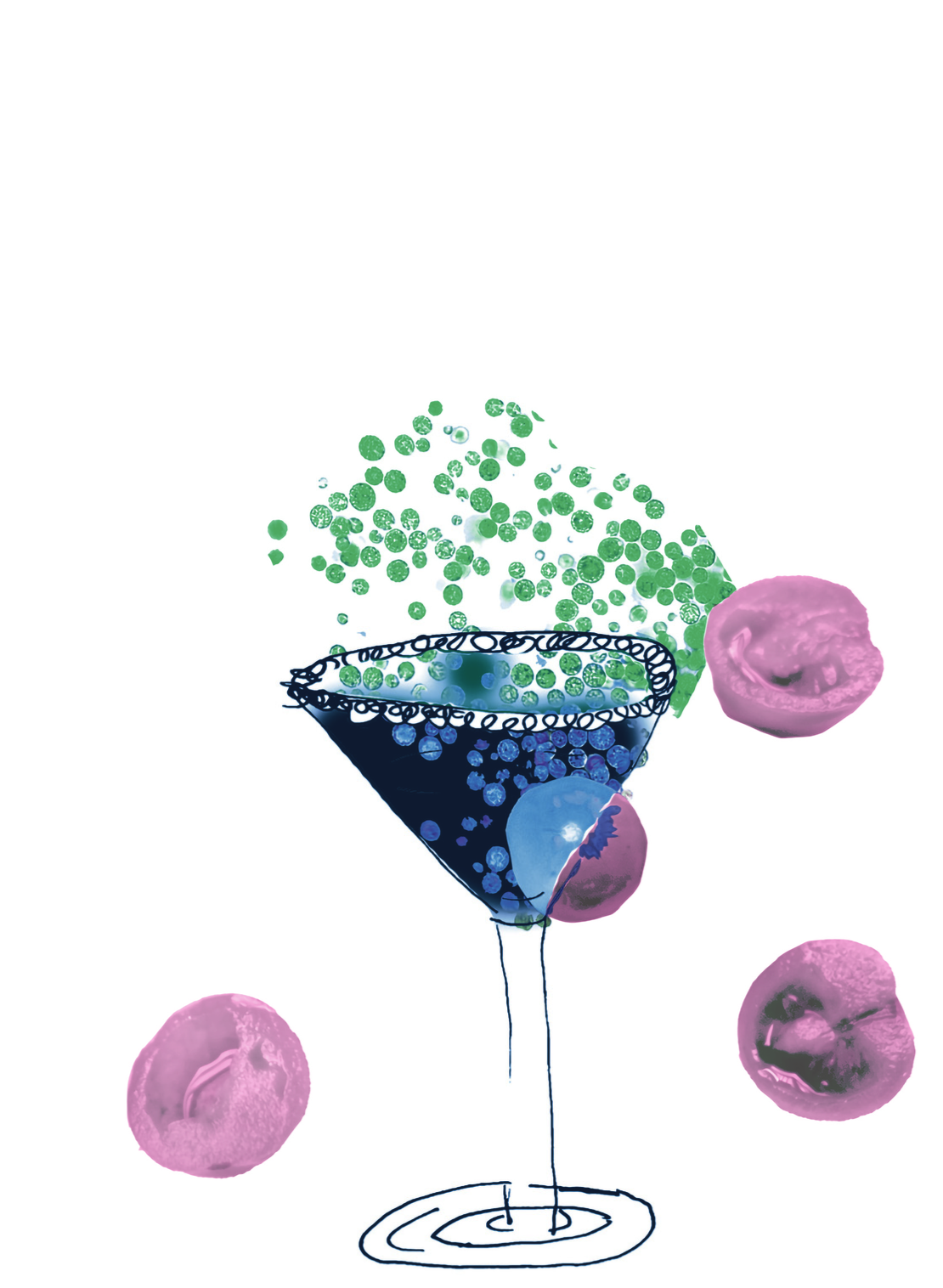
One possible path is offered by forms of knowledge that do not emerge abstractly, but through long-term relationships with plants, the body, place, and other people. anto_nie’s project Trhaly*i jsme spolu (We Picked Together) brings together a herbarium, recipe book, personal memories, interviews, infusions, and a digital interface, tracing the ways in which knowledge is preserved, transformed, and passed on. Within the exhibition space, this dimension is further developed through a bar serving fermented drinks and other preparations, translating herbal knowledge into a shared, embodied practice.
The desire to know, or at least influence, one’s own future, meanwhile unfolds within an infrastructure that is itself constantly predicting our next steps. In the video POV: Time To Influence Your Targeted Ads, Ginevra Petrozzi invites participants in her workshop to speak their “perfect future” into a smartphone, phrasing it in the present tense. A gesture familiar from manifestation thus intersects with the internet-era belief that a listening device can be prompted to alter the algorithm that determines what it recommends to us. The smartphone assumes the role of a contemporary oracle: from fragments of the present, it constructs an image of what is to come, which then feeds back into our decisions. The boundary between divination and technological prediction consequently becomes less self-evident.
The need to undergo a trial, overcome one’s fears, or achieve transformation through a particular experience, in turn, follows the structure of an initiation narrative. This is precisely what Michaela Kozáková and Veronika Poslední explore in their video I went to Brtník-Lhotka to fight a bear and this is what happened. The journey towards a confrontation with a bear combines the archetypal motif of an encounter with danger with the logic of the internet challenge and contemporary narratives of self-transformation. The journey, however, gradually branches into absurd and surreal situations in which landscape, interpersonal relationships, environmental anxiety, esoteric practices, and digital imaginaries converge. The linear structure of the initiation narrative begins to unravel: the confrontation with the bear ceases to be a clearly defined goal and becomes part of a narrative in which different ways of seeking orientation and personal transformation overlap and intersect.
BIO:
Michaela Kozáková
Michaela Kozáková graduated from the Center for Audiovisual Studies (CAS) at FAMU. Her practice explores environmental themes related to movement and, in particular, our relationship to cultural landscapes. Central to her work is storytelling connected to walking through the landscape and to human presence and impact within the context of the climate crisis. She is currently developing these interests through both study and practice in landscape management and stewardship. She grazes sheep in areas of cultural open woodland, contributes to the conservation management of sites, and is interested in the restoration of extensive orchards, tree avenues, and agroforestry within the landscape. She is learning the practices of gardening and orchard cultivation, while working collectively to explore possibilities for horticultural and landscape-based practice.
Veronika Poslední
Veronika Poslední is an artist and filmmaker currently studying at the Center for Audiovisual Studies (CAS) at FAMU. Working within experimental film, she operates at the intersection of the cinema and the gallery. She also creates photographic installations. In both practices, she draws on phenomena of digital space and non-human perspectives to explore how images, technologies, and contemporary mythologies shape our perception of reality and belonging. She is fascinated by states of limbo, escapism, and repetition, both on a personal and societal level. In her collaborative work with Michaela Kozáková, as well as in her individual practice, she deconstructs experiences of systemic anxiety and ecological grief, reassembling them into absurd and often surreal situations.
Ginevra Petrozzi
Ginevra Petrozzi is an artist and interdisciplinary designer currently living and working in the Netherlands. Her work wishes to expand the notion of magical thinking in the context of modern predictive systems, such as AI, machine learning and algorithmic processes. Through academic research, writing and creative production she aims to make space for other ideas and forms of intelligence, knowledge and wisdom, both human and non-human. Currently, she is exploring the possibilities of mysticism and the occult within the landscape of contemporary techno-politics. In this framework, she took the role of a “digital witch”, reclaiming the archetypal role of the sorceress as a healer, and as a political rebel.
anto_nie
anto_nie is an artist, game designer, educator, and facilitator working between Prague and Vienna. They studied Experimental Game Cultures at the University of Applied Arts Vienna (die Angewandte). Their practice explores themes including folklore, monstrosity, queer ecology, and herbalism. They work with the narrative mechanics of role-playing games, 3D, game engines, and other ways of creating communal (non-)physical spaces.