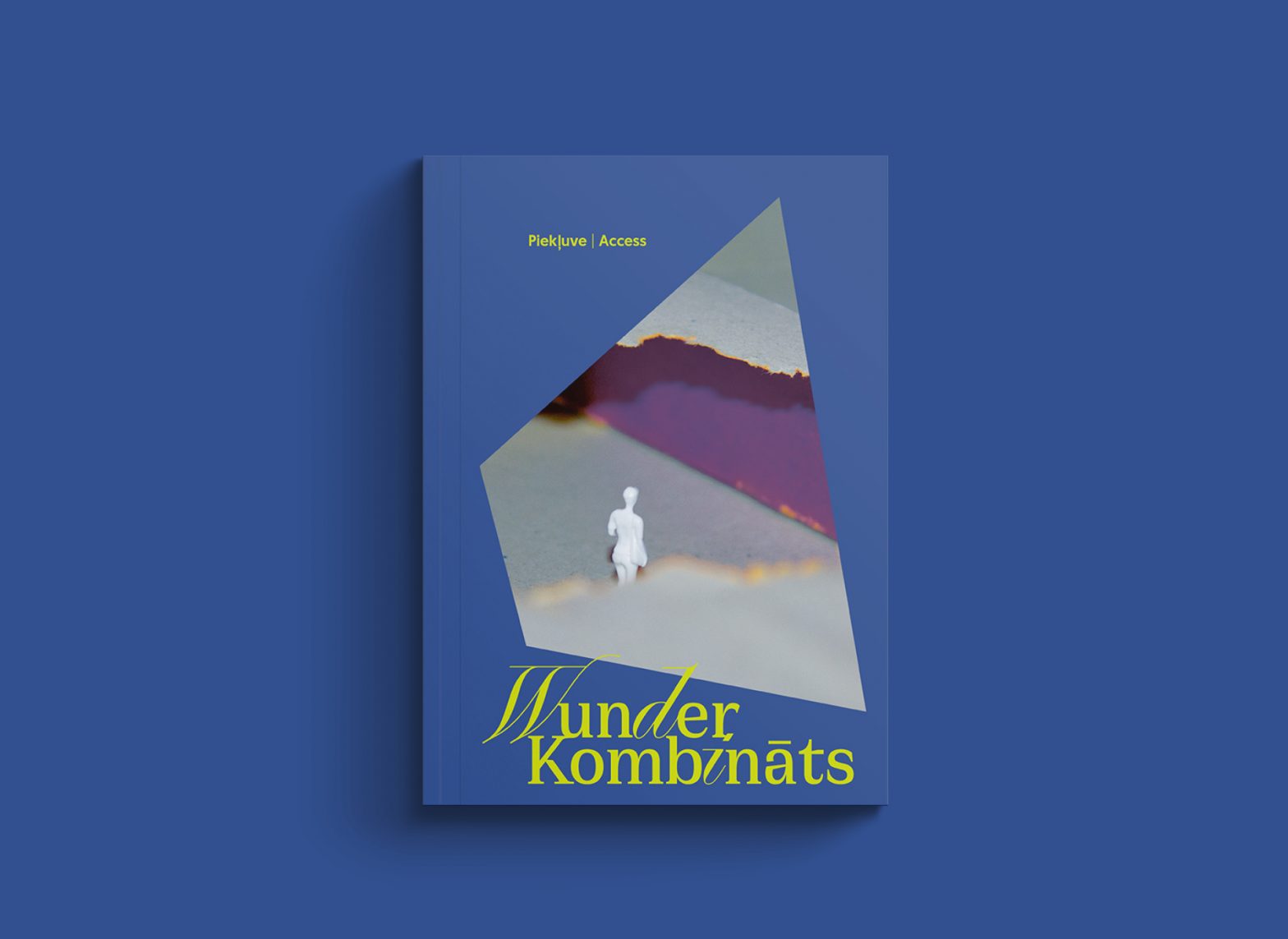
BOOK LAUNCH: WUNDERKOMBINĀTS. ACCESS
On 9 December at 19.00, cultural space RAA in Riga will host the launch of the publication WunderKombināts. Piekļuve / Access, kicking off a series of thematic publications intended as a satellite project, complementing the yearbook (WunderKombināts. Latvian Art Yearbook).
While smaller in scope, the series will retain the essential characteristics of WunderKombināts: a primary focus on the perspectives of local authors while also including the voices of foreign researchers; a visual essay sat alongside written texts; and bilingualism, for content accessibility to non-Latvian-speaking audiences.
The central theme of this publication – access – emerged naturally from conversations and observations in the local art scene. These were mostly about the lack of access to both material and intangible resources in the creative sphere, but also about freedom of speech and expression, the accessibility of art and its language to different audiences, agency over one’s time and other aspects, prompting reflections on accessibility and availability from very diverse angles. In other words, justifiably but largely arbitrarily, we have chosen to expand the meaning of the terms “accessibility” and “availability” into diverse contexts and perspectives within the art world, using them as tools for exploring new facets and approaches.
The authors of the publication address topics such as the accessibility of content, meaning, and physical environment to different audiences; the paradoxical coexistence of elitism and democracy in the art world; the approaches to “slowness” in the practices of artists and curators; the use of language in art texts and speech; the reclaiming of public spaces through the intertwining strategies of urban planning, political ativism and artistic practices; awareness of one’s privileges and limitations, as well as “access to freedom” (referring to Lina Michelkevičė’s essay in the publication), which has become particularly relevant in the context of recent events in Lithuania and Latvia, thinking about the safeguarding the independence of the cultural sphere and democracy. Often, issues of accessibility and availability are unconsciously marginalised because they are perceived very narrowly – primarily as only adapting the physical environment to people with certain functional limitations or, in the case of availability, the existence of certain services. In fact, thinking and talking about availability and accessibility is thinking and talking about fundamental values: rights and responsibilities, privileges and restrictions, power relations and freedoms. It seems that only in the moment of real or potential threat to them do we truly realise and appreciate the fundamentality of our freedoms, in art as in any other sphere.
The publication includes texts by Agnese Zviedre, Žanete Liekīte, Liāna Ivete Žilde, An Paenhuysen, Lina Michelkeviče, and a visual essay by Liene Pavlovska. WunderKombināts. Piekļuve / Access is published by Wunder Kombinat, edited by Elīna Ķempele, designed by Anete Krūmiņa, and printed by Jelgavas tipogrāfija.
The publication will be available for purchase after 9 December. It will be available at a special price for the first time at the opening event.
After a closer look at the publication and meeting its creators and authors during the informally formal part of the opening, a concert by Miķelis Dzenuška’s jazz trio will follow at 20.00. Musicians: Miķelis Dzenuška (vibraphone), Daniēls Pelcis (bass) and Uģis Upenieks (percussion). The music created by Miķelis Dzenuška, which the composer himself describes as “democratic”, incorporates elements of jazz, funk, and academic music, complemented by a spark of humor and irony.The series of thematic publications is being created in parallel with the publication WunderKombināts. Latvian Art Yearbook, which focuses on critical analysis of Latvian art developments not only within the framework of art theory, but also in a broader context of relevant cultural and sociopolitical processes. The yearbook has been published since 2022, but the project is taking a break in 2025 (the yearbook will not be published this year).