EXHIBITION: AFTER GROWTH | ANNA GOEBEL
OPENING: 06/11/2026, 18.00
Curator: Monika Bakke
Location: Municipal Gallery Arsenał, Old Market Square 6
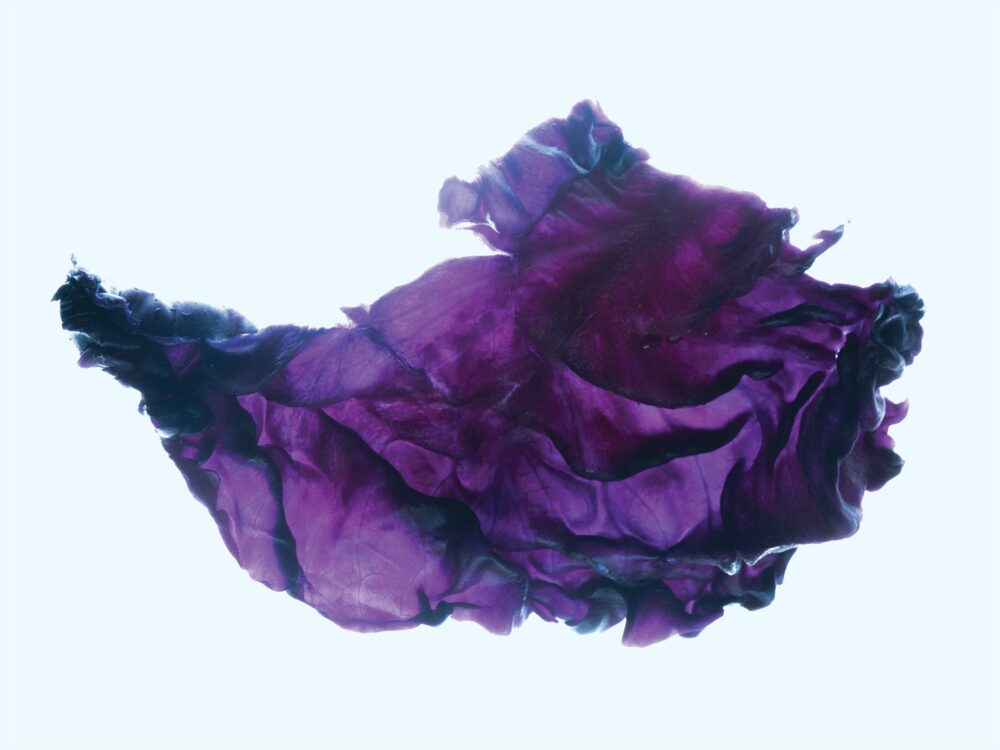
In Anna Goebel’s works, the bodies of plants – cabbages, goldenrods, avocados, and bananas – undergo processes of drying, stitching, pulverisation, and photography. Through these processes, other forms of material activity are revealed. What was once a biological structure also becomes an aesthetic one, while what served a metabolic or reproductive function in the life of the plant begins to operate as a surface, rhythm, texture, image, or object. Some bodies remain recognisable; others no longer are.
The outer leaves of cabbages and banana peels, like avocado shells and stones, are kitchen waste, while Canadian goldenrod and giant goldenrod are invasive plants. They all therefore belong to the sphere of the unwanted – cast out of the orders of utility, consumption, and aesthetic appeal. Goebel works precisely with this kind of matter, revealing its processes and structures as they exist beyond the logic of rapid consumption and excess. The artist works slowly: she spends a long time with discarded matter and allows the outcome to emerge through the interplay of her gestures, time, and the properties of the material.
In this sense, Goebel’s works can also be read through the lens of the private economy of everyday life. They make visible small gestures of retaining, putting aside, storing, and reusing. This is not a monumental narrative of recycling, but one grounded in the scale of the home, the table, the studio, and the individual who recognises value in what is usually discarded almost immediately. An outer cabbage leaf, a shell, a stone, or a fragment of goldenrod does not return either to its former function or to the biological cycle. Instead, these materials begin to circulate between the home, the studio, the image, and the object, becoming materials for thinking, looking, and constructing forms. This economy of remnants is therefore not about restoring things to usefulness in any straightforward sense, but about altering the conditions under which they operate. What has not been consumed, or has ceased to be needed, begins to work in a new way.
Here, a remnant operates differently from a living plant, but it is no less active. The materiality of what remains after growth reveals further, different, and less obvious modes of agency. Plant forms – bodies bearing traces of the earlier organisation of matter through processes of growth, nourishment, photosynthesis, reproduction, and decomposition – enter the artist’s work only after they were harvested, used, or abandoned. They are not, however, treated as worthless. The artist instead brings out their fibrous qualities, networks of veins, surfaces, colours, and hidden properties and structures. She does not so much give plant remnants a new form as join in the continuing process of their becoming. This is how objects and images emerge in which the material’s original provenance is not always recognisable. Once processed, the salvaged structures become fragmentary and ambiguous. Plant matter nevertheless continues to endure, changing in scale, texture, and the ways in which it can be perceived.
If After Growth is understood literally, the matter with which the artist works already exists beyond the phase of biological growth. The exhibition’s title, however, also opens up a broader field of meaning, invoking the concept of post-growth as a critique of incessant acceleration, ever-increasing production and consumption, and the continuous replacement of one thing by another. The exhibition therefore questions the understanding of development as simple multiplication, while also exploring what happens to material form after its biological growth, use, rejection, and loss of its original function.
The artist’s work is not concerned with rapid production or the spectacular transformation of waste into an attractive object. Rather, it involves attentively following matter in its fragility, resistance, smell, drying, fading, and decay. In this sense, Goebel’s works can be read as a practice of responsible making. The artist does not impose an entirely external order on the materials; instead, she explores what can emerge through limited means and through working with what already exists, has been gathered or found, or remains from other processes. After Growth therefore does not signify the end of form, but rather its continued, slower, and less obvious endurance in remnants, traces, and material transformations.
Monika Bakke