TALK: THE GDR AND THE DOCUMENTA
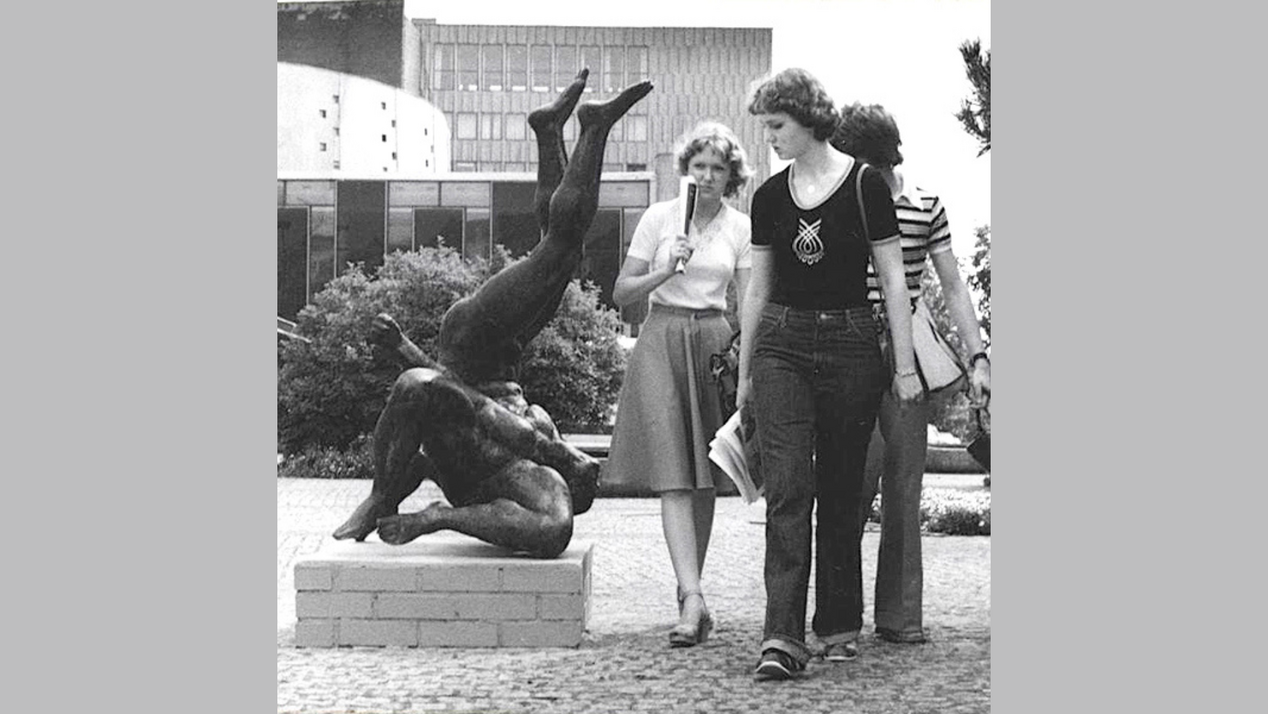
The ifa-Galerie Berlin, together with historians Dr. Alexia Pooth and Dr. Swantje Greve, invites you to a talk and conversation about a little-known chapter in the history of German art and contemporary history: the GDR’s participation in documenta 6 in 1977—a unique instance where artists from the GDR were represented at the international exhibition in Kassel. Works by Willi Sitte, Bernhard Heisig, Werner Tübke, Wolfgang Mattheuer, Jo Jastram, and Fritz Cremer were shown there—a participation that had a political and social impact extending beyond the realm of art. Thus, Georg Baselitz and Markus Lüpertz withdrew their works, as they did not wish to exhibit alongside East German artists, while “The Disobedient Painters”—a group of formerly persecuted East German artists—denounced the suppression of free art in the GDR through leaflets and a demonstration.
The talk sheds light on the cultural-political conditions that enabled this participation and reveals how closely art, diplomacy, and ideology were intertwined during the Cold War. At the same time, it examines the controversial debates and protests that accompanied the GDR’s contribution, as well as the tensions between state cultural policy and artistic freedom.
The starting point is the research of Dr. Alexia Pooth, who has long studied the relationship between the GDR and documenta. In her book *Exhibition Politics: documenta and the GDR*, she traces how documenta served not only as a major art exhibition but also as a stage for inner-German cultural politics. Together with Dr. Swantje Greve, she opens up new perspectives on the interconnections between art and politics and on documenta’s role within the tension between East and West.
Dr. Swantje Greve
Historian
Swantje Greve is a historian who earned her doctorate at Humboldt University of Berlin as part of the Independent Historians’ Commission investigating the history of the Reich Ministry of Labour during the Nazi era. She has worked as a researcher and curator on various exhibition projects at the Topography of Terror Foundation and the German Historical Museum in Berlin. Since 2022, she has been working as a freelance historian; recent projects include a review of street names in the context of the Nazi era for the city of Kempten (Allgäu) and work on the ifa exhibition “Rauschen: Echos einer Institution” (Noise: Echoes of an Institution).
Alexia Pooth Kunst- und Kulturhistorikerin
Alexia Pooth ist Kunst- und Kulturhistorikerin und war – nach beruflichen Stationen in der Neuen Nationalgalerie Berlin, der Stiftung Bauhaus Dessau und dem Deutschen Historischen Museum – bis 2024 wissenschaftliche Mitarbeiterin am Leibniz-Zentrum für Zeithistorische Forschung Potsdam. Seitdem leitet sie die Kunstsammlungen moderne und zeitgenössische Kunst der Ruhr-Universität Bochum. In ihrer Forschung und Lehre beschäftigt sie sich mit Ausstellungs- und Sammlungspolitiken im geteilten Deutschland, der Geschichte der documenta sowie Wohnen, Handwerk und Architektur. Zu ihren jüngsten Publikationen gehören: “Exhibition Politics. Die documenta und die DDR”, Kerber Verlag, 2024 und “Handwerk Ost. Arbeits- und Lebenswelten zwischen Plan und Markt” (gemeinsam mit Thomas Schaarschmidt), Chr. Links Verlag, 2026.